
Urea and potash shortage: how humic acid, seaweed and amino acids help you need fewer bags
Why only 30-45% of urea reaches the crop, how to stop the losses, how potash-mobilising bacteria, humic acid, seaweed extract and amino acids help the crop do more with less, and how farmers cut urea.
Reality check
Of every three bags of urea, more than one may never reach the crop. When urea and potash are short, the cheapest bag is the one you stop losing.
Indian crops use only about 30-45% of the nitrogen in urea; the rest is lost to the air and to leaching. You can need fewer bags by splitting urea, placing it well and using biostimulants and microbes: humic acid keeps nutrients in the root zone, seaweed extract and amino acids help the plant use what it takes up and cope with stress, and bacteria add nitrogen and free potash. Many farmers have cut urea this way; it does not mean starving the crop.
Where your urea goes
In India, heavy urea use has pulled nitrogen use efficiency down to about 30 to 45%. Most of the rest escapes as gas from urea left on the soil surface, or washes below the roots with irrigation water. Too much urea also makes crops soft and lush, so pests and diseases come faster and the crop can fall over.
So every bag saved from loss is a bag you do not need to buy. When urea, DAP or potash is short, that matters twice.
Use fewer bags of urea
- Split urea into two or three doses at the stages the crop needs it, instead of one heavy dose.
- Give it just before irrigation, or mix it into the soil. Urea left on dry, hot soil turns to gas.
- Do not overdo early doses. Watch the leaf colour, and add more only if the crop turns pale.
- Use nitrogen-fixing bacteria: Azotobacter for wheat and vegetables, Azospirillum for cereals, Acetobacter for sugarcane and Rhizobium for pulses.
- Return crop residues and add compost. Organic matter releases nitrogen slowly through the season.
Potash: the bag many farmers skip, and how to stretch it
- Potash fills grain, tubers, fruit and sugar, and helps the crop stand heat, cold and disease.
- Many Indian soils hold potash locked in their minerals. Potash-mobilising bacteria such as Immunity KMB help release it.
- Crop residues are rich in potash. Burning them or carrying them away takes that potash off the farm.
- Do not skip potash for potato, banana or sugarcane on soils that test low.
How humic acid, seaweed and amino acids help
| Biostimulant | What it does | Where it helps most | Read more |
|---|---|---|---|
| Humic acid | Holds nutrients in the root zone, improves soil structure, and helps roots grow | Hard or sandy soils, at sowing and with fertilizer | Humic acid and the root zone |
| Seaweed extract | Carries natural growth signals that support roots, flowering and fruit set, and helps plants cope with stress | Heat, cold or drought, flowering, fruit set | Seaweed extracts and plant physiology |
| Amino acids and protein hydrolysates | Give the plant ready building blocks, so it recovers faster and uses nutrients better | After stress, during fast growth | Protein hydrolysates and nutrient use |
Quality matters. A mildly processed seaweed extract keeps much more of what the plant uses than a cheap one made with harsh chemicals and high heat. Biostimulants sold in India must meet the Fertiliser Control Order; see what biostimulants are.
What farmers saw
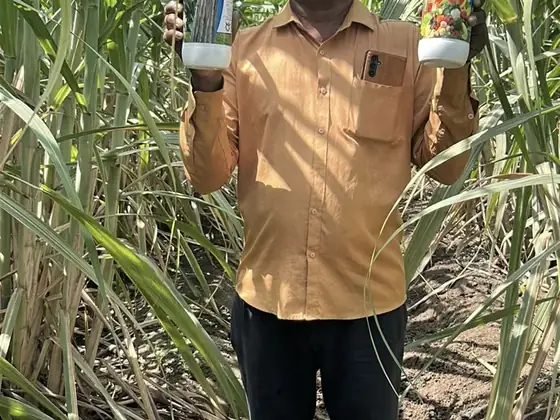
- Falguniben Patel, Navsari: sugarcane with about 2 to 2.5 bags of urea where farmers might otherwise use 3 or 4, using Immunity Granules, Sugarcane Special and Gold. Leaves were still green at harvest.
- Budhabhai Patel: sugarcane on 6 bags of chemical fertilizer, while the plot next door got 10 to 12.
- Bharatbhai, Lariya: cumin with no DAP, and urea only once in a small amount.
- These are their own experiences. Read their stories in farming without DAP.
A simple plan to cut urea and NPK this season
- Test your soil, so you cut what the crop does not need, not what it does.
- At sowing: compost, Immunity Granules and the right biofertilizers.
- During the crop: your crop's Immunity Special through irrigation water or drip, and Immunity Gold sprays at fast growth and after stress.
- Cut one urea dose, or reduce each split, and watch the leaf colour.
- Leave a strip on your old practice and compare at harvest.
- Next season, cut a step more where the crop stayed strong. Ask on WhatsApp +91 99787 91167 for a schedule for your crop.
Sources
- Down To Earth: Why India must reduce its dependence on conventional urea (July 2026)
- Gujarat Bio Organics on YouTube: Falguniben Patel's sugarcane
Written by Gafar Laiya, founder of Gujarat Bio Organics, working with farmers since 2006. Results differ from farm to farm with soil, weather, crop and management. Farmer experiences on this site are their own reports, not a promise of results.
Questions
What is the organic alternative to urea?
No organic product carries 46% nitrogen. What works is cutting losses and adding biological nitrogen: split urea, nitrogen-fixing bacteria such as Azotobacter, Azospirillum, Acetobacter and Rhizobium, compost, and biostimulants that help the crop use nitrogen better.
Can I stop urea completely?
Pulses can need little or none when Rhizobium is active. For most other crops, reduce urea step by step and watch the crop, rather than stopping at once.
What can replace potash?
Potash-mobilising bacteria release potash locked in soil minerals, and returning crop residues brings potash back. On soils that test low, potato, banana and sugarcane still need potash fertilizer.
Do seaweed and humic acid reduce fertilizer need?
They help the crop take up and use nutrients better and cope with stress, so many farmers can use fewer bags. They work alongside good nutrition, not in place of all of it.
How do I know I have cut too much nitrogen?
Older leaves turn pale yellow first and growth slows. Give a split dose of urea and adjust next time.
Watch: from the field
From our YouTube channel. Farmers describe their own fields; results differ with soil, weather and care.
Send us your enquiry
Tell us your crop, the problem and your location, and send a photo if you can. Our team replies on WhatsApp or calls you with what to check, which product suits and where to buy it near you.